
Showing posts with label Movies. Show all posts
Showing posts with label Movies. Show all posts
Wednesday, January 29, 2014
Contextualized or Compromised?
Good reflections from Trevin Wax on movies and the intake of media in general.

Thursday, December 13, 2012
Before Viewing "The Hobbit"...
David Mathis:
Tolkien and C.S. Lewis fans may still want to get this eBook before it goes up in price.
At long last, Bilbo Baggins is back. Whether you’re fanatic enough to dress up for the midnight showing, or patiently awaiting a weekend outing, or even content to meander into a theater after the crowds die down, here’s some advice for how to make the most of your experience of The Hobbit: An Unexpected Journey.Read the rest.
Tolkien and C.S. Lewis fans may still want to get this eBook before it goes up in price.
Wednesday, December 05, 2012
Friday, July 20, 2012
True and False Hope in Our Movies
.jpg)
When our culture’s biggest films express hope – and when audiences embrace them for doing so - it’s evidence that we collectively yearn for something better, that even those without faith ache for a world as God intended it to be.Read the rest.
And yet there is something false about the hope offered by The Dark Knight Rises. It’s false to the series in particular and false, in a wider reading, to the sort of hope that Christians hold dear. The last-minute assurance the movie gives us reminded me of certain portions of N.T. Wright’s Surprised by Hope: Rethinking Heaven, the Resurrection and the Mission of the Church. Discussing contemporary, feel-good ideas about heaven, he writes, “What we have at the moment isn't as the old liturgies used to say, 'the sure and certain hope of the resurrection of the dead,' but a vague and fuzzy optimism that somehow things may work out in the end. ”
As Christians, we need to carefully discern between vague hope and resurrection hope in our popular stories. It does Scripture a disservice to mix one with the other. Christian hope isn’t simply a happy ending. It isn’t a villain’s death. It’s belief in the prospect of a new creation, one borne of sacrifice, forgiveness and even, at times, earthly defeat.
Monday, January 09, 2012
More Info For You Hobbit Nerds (Like Me)
TheHobbitMovie.com:
From Academy Award®-winning filmmaker Peter Jackson comes The Hobbit: An Unexpected Journey, the first of two films adapting the enduringly popular masterpiece The Hobbit, by J.R.R. Tolkien. The second film will be The Hobbit: There and Back Again.(HT: Ben W.)
Both films are set in Middle-earth 60 years before The Lord of the Rings, which Jackson and his filmmaking team brought to the big screen in the blockbuster trilogy that culminated with the Oscar®-winning The Lord of the Rings: The Return of the King.
The adventure follows the journey of title character Bilbo Baggins, who is swept into an epic quest to reclaim the lost Dwarf Kingdom of Erebor from the fearsome dragon Smaug. Approached out of the blue by the wizard Gandalf the Grey, Bilbo finds himself joining a company of thirteen dwarves led by the legendary warrior, Thorin Oakenshield. Their journey will take them into the Wild; through treacherous lands swarming with Goblins and Orcs, deadly Wargs and Giant Spiders, Shapeshifters and Sorcerers.
Although their goal lies to the East and the wastelands of the Lonely Mountain first they must escape the goblin tunnels, where Bilbo meets the creature that will change his life forever…Gollum.
Here, alone with Gollum, on the shores of an underground lake, the unassuming Bilbo Baggins not only discovers depths of guile and courage that surprise even him, he also gains possession of Gollum’s “precious” ring that holds unexpected and useful qualities … A simple, gold ring that is tied to the fate of all Middle-earth in ways Bilbo cannot begin to know.
Ian McKellen returns as Gandalf the Grey, the character he played in The Lord of the Rings trilogy, and Martin Freeman in the central role of Bilbo Baggins. Also reprising their roles from The Lord of the Rings movies are: Cate Blanchett as Galadriel; Ian Holm as the elder Bilbo; Christopher Lee as Saruman; Hugo Weaving as Elrond; Elijah Wood as Frodo; Orlando Bloom as Legolas; and Andy Serkis as Gollum.
The ensemble cast also includes (in alphabetical order) Richard Armitage, John Bell, Jed Brophy, Adam Brown, John Callen, Luke Evans, Stephen Fry, Ryan Gage, Mark Hadlow, Peter Hambleton, Barry Humphries, Stephen Hunter, William Kircher, Evangeline Lilly, Sylvester McCoy, Bret McKenzie, Graham McTavish, Mike Mizrahi, James Nesbitt, Dean O’Gorman, Lee Pace, Mikael Persbrandt, Conan Stevens, Ken Stott, Jeffrey Thomas, and Aidan Turner.
The screenplays for both The Hobbit: An Unexpected Journey and The Hobbit: There and Back Again are by Fran Walsh, Philippa Boyens, Guillermo del Toro and Peter Jackson. Jackson is also producing the films, together with Fran Walsh and Carolynne Cunningham. The executive producers are Alan Horn, Ken Kamins, Toby Emmerich and Zane Weiner, with Boyens serving as co-producer.
Under Jackson’s direction, both movies are being shot consecutively in digital 3D using the latest camera and stereo technology. Filming is taking place at Stone Street Studios, Wellington, and on location around New Zealand.
Among the creative behind-the-scenes team returning to Jackson’s crew are director of photography Andrew Lesnie, production designer Dan Hennah, conceptual designers Alan Lee and John Howe, composer Howard Shore and make-up and hair designer Peter King. The costumes are designed by Ann Maskrey and Richard Taylor. The score is being composed by Howard Shore.
Taylor is also overseeing the design and production of weaponry, armour and prosthetics which are once again being made by the award winning Weta Workshop. Weta Digital take on the visual effects for both films, led by the film’s visual effects supervisor, Joe Letteri. Post production will take place at Park Road Post Production in Wellington.
The Hobbit: An Unexpected Journey and The Hobbit: There and Back Again are productions of New Line Cinema and MGM, with New Line managing production. Warner Bros Pictures is handling worldwide theatrical distribution, with select international territories as well as all international television licensing, being handled by MGM.
The Hobbit: An Unexpected Journey will be released beginning December 14, 2012. The second film, The Hobbit: There and Back Again, is slated for release the following year, beginning December 13, 2013.
Wednesday, April 13, 2011
"24" Movie Coming in 2012
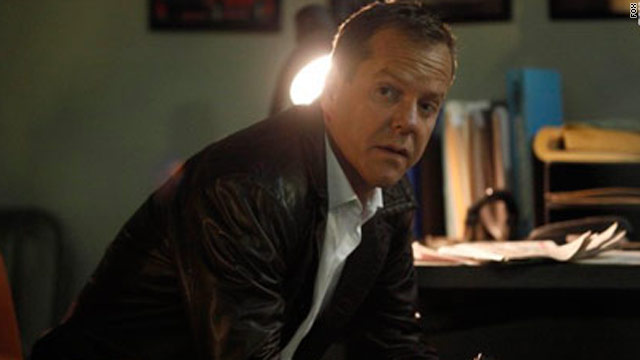
Guest Post By Los
"24" was one of those TV shows that drew in the dudes who liked explosions, fighting and a "Bourne Identity" type story. According to CNN it is going to be made a movie in 2012.
via CNN:
It looks like the long-awaited for "24" movie is getting a little closer to reality.
Kiefer Sutherland, who starred as Jack Bauer on the fan favorite Fox series, told the ladies of "The View" last month that the show would get the cinematic treatment next year, and now producer Brian Grazer has backed him up.
“Got off the phone Keifer yesterday and we are very excited about producing the ‘24' movie for next year,” Grazer tweeted on April 5.
Friday, March 26, 2010
Film & Theology: The Top 5 Lectures from Mars Hill Church
Like me, many of you love to think theologically about movies. If that is you, you might want to check out this post from the Resurgence blog.
Pastor James Harleman leads Mars Hill's Lake City Campus. He also teaches classes on engaging culture and conducts monthly Film & Theology events at Mars Hill Church. Here are his top five Film & Theology lectures.
Wednesday, February 10, 2010
Thursday, December 17, 2009
Precious - Who Will Hear?

This independent feature and Oscar underdog is heavy stuff. The central figure is Claireece Precious Jones, an obese, illiterate16-year-old girl from Harlem whose regular abuse at the hands of her father has already resulted in one child. As the movie begins, she’s pregnant with another.*********************************************************************
As the movie traces her small steps toward a somewhat better life – starting with learning the alphabet – “Precious” nimbly walks the line between exploitative horror show and inspirational hooey. It’s a noble effort, with outstanding performances. But the question you’re left with after watching – you might say suffering – through the experience is this: To what end?
You feel helpless while watching “Precious,” and despite the progress Precious makes, you don’t feel much better after the movie is over. As the misery of Precious’ life becomes overwhelming, my instinctive response was revulsion – at the abuse, the poverty and, I’ll admit, to Precious herself, an enormous teen who eats a bucket of fried chicken for breakfast and ends up vomiting outside of her classroom. She seems hopeless, as does the world around her.
So what are Christians to do with this movie? If you believe that God has charged us to redeem the world in His name, surely social justice is a part of that charge. But how do we respond in the face of such inexplicable awfulness, a situation that even leaves the social workers in the film flummoxed?
“Precious” leaves the audience in a state of despair, the kind where you throw your arms in the air and plead for God’s grace. Perhaps, then, “Precious” is something more than a call to human action. Perhaps the film isn’t directed at us, but at God. Some movies praise Him, many defy Him and others simply scream out in rage over the despicably fallen state of His world.
“Precious” screams. Who will hear?
If we didn't believe in a God who would one day return to this earth to make all things right, then a movie like this would literally drive us insane. The older I get, the more I long for the justice of God.
Tuesday, July 21, 2009
I Couldn't Agree More - The Danger of Watching Dumb Summer Movies
Doug Wolter links to a good article:
Dumb movies are made either by dumb people or (more likely) people who stifle their artistic potential for the sake of appealing to the lowest common denominator. Rather than making an effort to appeal to our virtues (I would argue this is one mark of true art), they tend to appeal to our vices. Their movies thrive off of simple formulas that are known to cause audiences to flock to the theaters: existing franchises, large explosions, crude and gross humor, slapstick comedy, sexual exploitation, sentimental manipulation of emotions, and simplified plot-lines …
The greatest danger of these movies is not what they are but what they do to us. They give us permission and at worst train us not to think about what we’re watching. As Christians, we don’t have this option. We are charged to remain sober and vigilant and to judge all things by scripture and the gospel. Does this mean we must concoct touching spiritual metaphors based on everything we see? No. But it does mean that if we ever find ourselves being taken on a ride by a movie about giant fighting robots [i.e. Tranformers 2], it’s best to either take control or jump off.
Thursday, July 02, 2009
Thinking Theologically About The Movie "Public Enemies"

ThinkChristian.net:
Celebrating criminals as heroes has been a longstanding Hollywood tradition, from 1931’s “The Public Enemy,” in which James Cagney played a Prohibition-era bootlegger, to the recent “Public Enemies,” starring Johnny Depp as famed bank robber John Dillinger.Read the rest.
What struck me as I watched this play out yet again is that it’s a narrative tradition the Bible – one of our earliest narratives – avoids altogether. That’s curious, because the Bible is otherwise full of all sorts of seedy Hollywood elements – sex, violence and so forth. There are scoundrels aplenty in its pages, but most of their stories spend less time on the sordid details of their sins than on their hard-won redemption.
Tuesday, December 30, 2008
Best Movies I Watched In 2008
(Click on the link for my commentary if you wish)
 Once
Once
 Expelled
 Breach
 Michael Clayton
 The Dark Knight
 Where The Light Is
 3:10 to Yuma
 Into the Wild
 Lake of Fire
 Gone Baby Gone
 Once
Once Expelled
 Breach
 Michael Clayton
 The Dark Knight
 Where The Light Is
 3:10 to Yuma
 Into the Wild
 Lake of Fire
 Gone Baby Gone
Sunday, November 02, 2008
Review of "W"

Seth Ward reviews Oliver Stone's, "W". He writes:
Sadly, the problem was in the filmmaking. The film lacked all the emotional virtuosity that we are used to in Stone films. The movie didn't know what to be about. Was it about the war? Was it about Bush Jr.'s relationship with his father? Was it about Bush Sr.'s failures? Was it about Bush's Christianity? Was it about the way in which the people surrounding Bush were too great of an influence? I don't know. And what about the election? What about 9/11? In classic Stone-style, we got little vignettes in the form of flashback. However, flashbacks are only effective if they serve to amplify the present tense situation or the overall POV the director is trying to emphasize. They sorta did, but the the flashbacks were entirely too long and too self-conscious and as a result we soon forgot about the main plot, whatever it was, altogether. You can get away with much using flashback in film. In writing, you can't. There are cardinal rules you must follow and most times they are summarized and without dialogue. It's okay in film if they are short and emphasize a point- again, a point that supports the greater point of the film. They were just the opposite here. The film would have worked better linearly.Read the whole thing.
But again, and I don't think Stone knew exactly what he was going for, so he threw them altogether in a pot, shook it up, and called it art. Consequently, the film lacked center, reality, and a sense of real truth. I just didn't buy it.
The best thing about "W" was Josh Brolin. He did a very good job portraying Bush amidst a culture that is filled with people who are long-standing established masters of the Bush impersonation. Somehow, Brolin was able to bring some authenticity to the character without shooting for laughs. He took the character serious and in doing so, he brought a few shades of character to Stone's caricature.
Sunday, October 05, 2008
Kimball on Religulous
Dan Kimball writes about viewing Bill Maher's film, Religulous. He sums up:
But... the bottom line for me, is that this film actually motivates me. It gives me energy to want to be more personally missional as well as in terms of rallying the church to be in the world and among people. It motivates me to want to be training and teaching Christians how to respond to these very things that are being asked today. I have a lot of hope and optimism, because I believe there are answers.It motivates me to hopefully be encouraging others to remember to "be in the world" as Jesus taught (John 17:15), so that people get to experience that all Christians are not like Bill broadbrushed them. So even if someone views the film and thinks Bill is raising great questions, they know Christians they can go and talk to about what he is asking. They know that all Christians are not the war-loving, can't wait till Armageddon types he sort of hints they are among other things. So they may see the film, and think "hmmmm...? That's not like the Christians I know."
Friday, September 26, 2008
A Filter For Your Movie Watching

I would be curious to hear what you think of this:
Clear Play lets you watch regular DVD's and SKIP the VIOLENCE, NUDITY, and PROFANITY! Now you and your family can safely watch current films like Jumper, Spiderwick Chronicles, Fool's Gold and The Bucket List and ClearPlay will imperceptibly skip all the objectionable material!ClearPlay software filters 2,700 movies produced over the past 40 years and includes a FREE 30 day membership that updates your ClearPlay system with the latest titles. Optional memberships available through Clearplay for only $7.95 per month so you'll always have plenty of new movie options! A ClearPlay membership gives you access to filters for all the newest ones as soon as the DVD's are released. Your membership also gives you a ClearPlay USB FilterStik, which lets you get new Filters with just a click of your mouse.
My first reaction is that this might be a great way to watch movies, but I have questions:
1. Who determines what is deemed, violent, nude or profane? Perhaps nudity is easier to define, but there is material on primetime TV that is not technical "nudity" that I still don't need to see or have my kids be exposed to.
2. Just because we have eliminated all the "bad stuff" from the movies does that mean they are purged from sin or evil? I'm not sure that eliminating these sorts of things means we can turn off our brains and assume we are "safe". Even when my kids are watching cartoons I want them to begin thinking theologically about the content they are consuming. Was that character disrespectful of his parents? Why do you think he/she was? Avoiding certain hallmark sins does not mean we are free to check out and consume without discretion.
3. Is there ever a place for the profane, violent, and nude in our movie watching? What would this software make of the movie The Passion of the Christ? I assume the majority of the movie would be blocked out. The would certainly miss the point. What about Schindler's List? There was non-sexual nudity in the movie that was disgusting, but drove home the horror of those events committed by the Nazis. I'm sure this was part of the intent of the director.
In the end this machine may or may not be helpful, but it may be wise to make your own decisions about your movie watching and not have a software do it for you. It could be easier to have the machine do it, but I believe God wants to have these decisions spring from the overflow of our hearts and not default to someone else's decisions for us.
What do you think? Is this something you could see yourself using, especially in light of the review of Craig Cabaniss' chapter on media consumption that I reviewed below?
Saturday, July 19, 2008
Dark Knight Of The Soul

Brant Hansen has an interesting take on the new Batman movie. He writes:
I think I get what he is saying here, but I don't find myself bored by experiencing great art. Perhaps he doesn't classify this film as "great" art". I guess having your expectations in line is probably the first step to not being bored or disappointed. When I see this movie on IMAX on Monday night (God willing) I don't expect to have it change my life or makes all my problems go away, but I do expect to marvel in the creative gifts of the hundreds of different people that collaborated to make this movie. When I observe this kind of artistic expression I find myself pointed to the ultimate Creative One and I find satisfaction in that. The finite creative expressions of humans point me to the infinite Creator. I don't think we have to disparage the former to see and worship the latter."The Dark Knight" is cultural rigormortis. It's what happens when we are done, and we are done. Jacques Barzun had it right, when he wrote a history of western culture up through the 1990s, and said, certainly, that our age is defined by boredom. We are excited by nothing, really, but maybe for a moment here, or a moment there, we can try to be turned on. Sex can do it (or fake sex, much more likely) but brutal violence can work, too, if for a short time.
Our culture is lying on the table, and "The Dark Knight" is just another jolt before the flatline resumes.
At least give us this: Our mass-market (which included me, yesterday) is willing to pay for it, but also demands some sense that it was all, ultimately, high-minded, that it was making some statement, that it was horrific, yes, but redemptive, blah blah blah. Expect many hip Christian types to write as much, because 1) That's the essence of being hip, and 2) Who doesn't like Batman?
But it's not redemptive...unless...
Unless we can emerge in the sunlight, after ALL THAT HYPE for this masterwork, this penultimate expression, this marvel-ous creation, saying, "Really? That's as good as it gets?"
Then we walk out into the sun, and decide it's infinitely more interesting than what we just paid to see.
This line of thinking for reflecting theologically about movies certainly has it's limits. Can watching porn draw my attention to the beauty of God's ideals for sex? Certainly not. Should a movie be watched that seems to simply glorify violence or torture? Probably not. Decisions about what kinds of movies should be viewed need to be made with much prayerful discernment and wisdom. Perhaps the artistic bad will outweigh the good in Dark Knight. I guess I'll have to wait until Monday to see...
Tuesday, July 08, 2008
Thinking Theologically About Movies

Since I love movies, I found this interview from Relevant to be intriguing:
While summertime is generally the season of blockbuster hits, it seems this summer’s films have been particularly intriguing and highly anticipated, from Iron Man to The Dark Knight, from WALL-E to The Incredible Hulk. Aside from the pure entertainment value, what spiritual value can be gleaned from these movies—and from film in general? We speak with Craig Detweiler on his new book, Into the Dark; his opinion on this summer's films; and how faith and film connect.
Here is a description of the book, Into The Dark:
In this book, Craig Detweiler examines forty-five films from the twenty-first century that resonate theologically--from The Lord of the Rings trilogy to Little Miss Sunshine--offering groundbreaking insight into their scriptural connections and theological applications. Detweiler writes with the eye of a filmmaker, leads Hollywood and religion initiatives at Fuller Seminary, and even came to faith through cinema. In this book, he unpacks the "theology of everyday life," exploring the Spirit of God in creation, redemption, and "general revelation" through sometimes unlikely filmmakers. It's the first authoritative book that dissects up-to-date movies selected by the popular Internet Movie Database. This book is recommended for teachers, students, pastors, film fans, and those interested in the intersection of Christianity and culture.
Monday, June 30, 2008
Atonement and Evil

Has anyone out there seen the movie, Atonement? What did you think? Good, bad? I saw the preview and it looked intriguing.
I recently read a review of it in Critique magazine where the author of the book upon which the movie is based, Ian McEwan (a pronounced atheist) gave a quote about the nature of evil in a PBS interview after the 9/11 attacks.
I don't really believe in evil at all. I mean, I don't believe in God, and I certainly don't therefore, believe in some sort of supernatural or trans-historical force that somehow organizes life on dark or black principles. I think there are only people behaving-and sometimes behaving monstrously. And sometimes their monstrous behavior is so beyond our abilities to explain it, we have to reach for this numinous notion of evil.See how his logic implodes upon itself here?

If evil is not real and is not something to be believed in as a reality, then why use the word, "monstrous"? If evil doesn't exist then we can't classify anything as "monstrous". We are simply reduced to preferences. One person may prefer murder and betrayal, another may prefer grace and mercy, but to use the word "monstrous" is foolishness if we deny the existence of evil. Monstrosities don't exist if evil does not exist since a monstrosity is by definition something evil. Even atheists are forced to borrow from the Christian worldview to make sensible comments about big questions in life.
See how he sneaks that in the back door?
Saturday, April 19, 2008
Breach

My wife and I watched this movie last night. It was great. Here is the description:
In February, 2001, Robert Hanssen, a senior agent with 25 years in the FBI, is arrested for spying. Jump back two months: Eric O'Neill, a computer specialist who wants to be made an agent is assigned to clerk for Hanssen and to write down everything Hanssen does. O'Neill's told it's an investigation of Hanssen's sexual habits. Within weeks, the crusty Hanssen, a devout Catholic, has warmed to O'Neill, who grows to respect Hanssen. O'Neill's wife resents Hanssen's intrusiveness; the personal and professional stakes get higher. How they catch Hanssen and why he spies become the film's story. Can O'Neill help catch red-handed "the worst spy in history" and hold onto his personal life?Here are some reviews on Rotten Tomatoes.com. We found it quite entertaining. Great script, great acting, great art.
Find it here on Netflix.
Subscribe to:
Posts (Atom)